Showing posts with label North East Neighborhood House. Show all posts

Wednesday, January 1, 2025

HAPPY NEW YEAR 2025 from THE INTREPID TOURIST

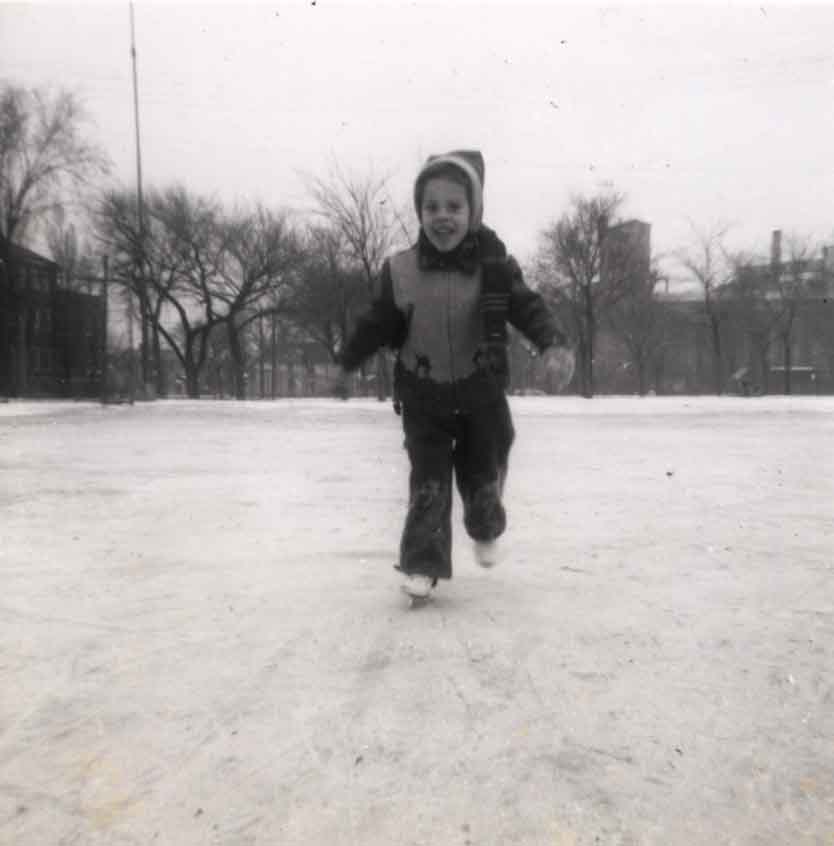
Caroline, ice skating at Bottineau Park in Northeast Minneapolis, 1950.

"By New Year’s Day, the pine needles of the Christmas tree are dry and brittle. It is time to take the tree down. After the lights and ornaments are removed and boxed for next year, we take the tree outside to the roof deck, propping it up in the snow. Decorated with strings of bread cubes and cranberries, it is ready for the birds to enjoy. With the excitement of Christmas over, it is now time to write thank-you notes and to enjoy skating at Bottineau Park, sledding at the Columbia Park golf course, and other winter activities."

From Chapter 7: Family Christmas at NENH, SETTLEMENT HOUSE GIRL: Growing Up in the 1950s at North East Neighborhood House, Minneapolis, Minnesota.

I have fond memories of celebrating the holidays when I was a child in Minneapolis. Now, many years later, from my home in California, I send best wishes to you and all my faithful readers.

HAPPY NEW YEAR 2025


Monday, December 2, 2024

TRAVELING THE WORLD WITH STAMPS: The Joy of Stamp Collecting

Stamps from Chile.

From the time I was small I loved collecting postage stamps, following in the steps of my father who often spent his evenings sorting, choosing, and mounting stamps in his album. The foreign names, currencies and images introduced me to a wider world and made me want to travel to those far-off places. It wasn’t until I grew up that I had the chance to travel abroad, but as I sorted my stamps and put them into albums I dreamed of going to those countries one day. I write about my childhood stamp collecting in my memoir, SETTLEMENT HOUSEGIRL: Growing Up in the 1950s at North East Neighborhood House, Minneapolis,Minnesota. Here are some excerpts from the book:

Snowy Egret, by John James Audubon.

The decorations in my father’s office at North East Neighborhood House reflect two of his favorite hobbies—bird watching and stamp collecting.
  On one wall, in a framed Audubon print, a snowy egret displays elegant white plumes. On another wall of my father’s office hangs a framed map of the United States filled with stamps commemorating notable historic events. On one stamp, tiny engraved images of men on horseback mark the arrival of the Kearny Expedition in New Mexico in 1846. On another, miniature boats brave a stormy sea to honor the Coast Guard. A stamp with the Iowa state flag flanked by two elegant stalks of corn honors the state’s 100th birthday.

Iowa Statehood commemorative stamp in my father's album.

I share my father’s love of stamps and have my own album. I love the exotic country names printed on each stamp—Magyar, Sverig, Republique Ivoire—and locating them on the maps in our atlas.  I learn more about geography and history from those colorful paper rectangles than from my books at school.

Christmas always yields a bumper crop of stamps for my collection–from the envelopes of cards and letters to blocks of stamps cut from the brown paper wrapped packages from out-of-town. Staff and foreign students who are residents at NENH save the stamps from their mail and give them to me as well.  I tear off the stamped corners of the envelopes and put them into bowls of warm water to soak.  As the water dissolves the glue, the stamps float off their backing. I fish them out and put them between paper towels, pressing with a heavy book to keep them flat. 

How to apply hinges to your stamps.

Once the stamps are dry, I sort them into glassine envelopes.
  I keep the stamps in cigar boxes and catalogue them alphabetically by country for foreign stamps, and numerically by denomination for US stamps, with a separate section for commemoratives. I select the best for my album, attaching each stamp with a folded paper hinge.

At the back of my album I have special pages for blocks—groups of four stamps torn from the 100 stamp sheets printed by the Post Office. Some of my blocks are in mint condition. These I slip into protective acetate holders. Unlike the used stamps, sullied by postmark ink and without glue on the back, these stamps can still be used for postage. The best mint blocks include the serial number for the sheet. Even more prized is a whole sheet of 100 stamps.

From the time I was born, my father routinely bought a sheet of each new commemorative at the time it was issued—three dollars a sheet—with the plan that they would grow in value over time. It was meant to be an investment to help fund my college education. Thirty years later, after I am grown, my father gives me his collection of mint sheets. They come with this note:


THE STAMP FANTASY

Buy one sheet of every new commemorative stamp for 18 years, 1944-1962.

Sell stamps in 1962 at their increased value, some at fantastic profit.

Result: Big Money  Equals: College education for Caroline

Reality: Missed many issues after 1948. Plus, couldn’t afford to keep it up, as cost of stamps increased from 3 cents to 4 cents to 10 cents, etc.

Value of stamps in collectors market in 1979:  3 cent stamp  =  3 cents cash

Therefore: Merry Christmas, 1979. Enjoy the stamps and use them for postage. Five 3 cent stamps = today’s postage.

Hope your envelopes are large enough!


By 1979, the cost of a first class stamp was 15 cents.

My father passed on his enthusiasm for stamp collecting to his grandson, my son Matt. When Matt was growing up, they spent hours together choosing stamps to put in his album.


Matt and my father, Les Scheaffer. 1984

"The postage stamps of a nation are a picture gallery of its glories. They depict in miniature its famous men and women, the great events of its history, its organizations, its industries, its natural wonders...No one can pursue this hobby without developing a greater knowledge of their national heritage." Arthur E. Summerfield, Postmaster General 1953-1961


SETTLEMENT HOUSE GIRL is available at Amazon in both a paperback and ebook edition. 


Monday, April 15, 2024

THE ROAD TO CAMP BOVEY: From Minneapolis to Northern Wisconsin, Recollections from Childhood

Camp Bovey sign, 1961.

Seventy-five years ago, under the direction of my father, Les Scheaffer, North East Neighborhood House, a settlement house in Minneapolis, founded Camp Bovey near Solon Springs, Wisconsin. It was a place where children and families of Northeast Minneapolis could enjoy nature and the outdoors, learn camping skills, and have fun together. My first trip to Camp Bovey (then called Camp Hodag) was when I was four years old. Over the next seventeen years I went there many times--with my family, as a camper, and as a staff member for the summer sessions when I was in college. No matter how many times I made the trip, I always felt the excitement of going to Camp.

The four Scheaffer children at Camp Bovey, 1951.

I write about Camp Bovey in four chapters of my new memoir, SETTLEMENT HOUSE GIRL: GrowingUp in the 1950s at North East Neighborhood House, Minneapolis, Minnesota. Here is an excerpt, describing the trip to Camp as I knew it as a child.

Camp Bovey. View of the lodge from across the lake, 2022.

The trip to Camp Bovey from northeast Minneapolis is 150 miles. I know all the stops and landmarks by heart, and no matter how many times I take the trip, the excitement of going to Camp never fades. If you don’t stop, you can make it in about three hours. But for our family the trip always takes longer, with stops along the way for gas, groceries, toilets, a picnic lunch, and if we are lucky, wildlife viewing--perhaps a deer, bald eagle, or in spring, a patch of trilliums.

We always aim to get an early start, but never do, and by the time we reach Taylor’s Falls on the Minnesota side of the St. Croix River, everyone is hungry. St. Croix State Park, across the bridge on the Wisconsin side of the river, is a favorite lunch spot with its scenic view, rocks to climb, and space for my brothers and me to use up some energy before getting back into the car.

After lunch we head east to Turtle Lake, where we turn north on Highway 63 toward Cumberland, home of the Tower House Restaurant, named for the turret on the Victorian house in which it is located. When I am thirteen I taste an exotic foreign food for the first time at the Tower House—pizza! It is delicious.

Cumberland is on an isthmus between two lakes. In winter, the Chamber of Commerce drives an old car onto the frozen lake and raises money by taking bets on when the ice will melt and the car will sink. In 1960, we pass through town in early April and the car is still sitting on the ice. We are on the way to Camp to celebrate my brother Tom’s tenth birthday. By the time we go by again, on our way to Camp for a Memorial Day work weekend, the car is gone. We never find out how long it took for the ice to melt that year.

After Cumberland, the next major town is Spooner. We sometimes stop for a light meal at the Buckhorn Inn on Spooner’s main street. My brothers and I love sitting on the high bar stools. We are allowed to order anything under a dollar. As we wait for our food we ponder the heads of deer and other animals mounted on the wall and wonder if the bizarre two-headed calf is real. It is. Outside Spooner, Highways 53 and 63 merge, and we continue north, going through the tiny towns of Minong and Wascott before arriving at our turnoff at Gordon. To the left is the fire tower on top of the hill above Lake St. Croix. We turn right onto County Road Y.

At Gordon, we are ten miles from Camp and almost there. The first five miles out of town are on a two-lane blacktop. When we reach Flamang Road, we turn left onto a graded sand road. We drive for another five miles, crossing Ox Creek and passing a few cabins. A sign for Camp Bovey, across from a cluster of tumble-down log buildings that we call the haunted farm, marks the last leg of the trip, a narrow rutted road winding through jack pine forest. It isn’t long before we get the first glimpse of Lake Metzger glimmering through the trees, and then, after passing the three “boys” cabins, pull into a parking place at the back of the lodge. We have arrived at Camp.

Flagpole. Dedication to Lester Scheaffer, founder of Camp Bovey, 1949.

Today’s trip to Camp Bovey bypasses Taylor’s Falls and follows the Interstate toward Duluth, cutting over to Highway 53 at Spooner. But the thrill of going to Camp never fades.


Camp Bovey is celebrating its 75th Anniversary this year, 2024. It is still a place for children and families to enjoy the out-of-doors. For more about Camp Bovey and anniversary events, go to the Camp Bovey Facebook page or the ESNS website. (North East Neighborhood House became East Side Neighborhood Services (ESNS) in 1963.)