Showing posts with label Jennifer Arnold. Show all posts

Monday, August 17, 2026

BILBAO: THE HEART OF SPAIN'S BASQUE COUNTRY, Guest Post by Jennifer Arnold

Bilbao, Spain. View from the River Nervion.

In June, my daughter Jennifer and a friend took a trip to northern Spain, visiting Bilbao and the surrounding area before going to conference in San Sebastian. I thank her for sharing her excellent photos and impressions of her trip with The Intrepid Tourist. This is Part 1 of her report. Part 2 will post next week.

Bilbao, river and bridge.

Before my trip to Bilbao I was told that Bilbao is the best city in the world. After three days visiting, I am inclined to believe it. Bilbao sits near the northern coast of Spain in Basque Country. It is a medium-sized city with a population of 352,000. It’s very densely packed (according to one site, more dense than San Francisco but less than New York). It is beautifully designed, with multiple meticulously-maintained public parks. The beautiful Nervion river runs through it, bordered by pedestrian paths and numerous pedestrian bridges to cross. 

A lion statue on top of a building is a famous site in Bilbao.

It is easy to get around Bilbao on trams, busses, metro or just by walking. We walked almost everywhere so we didn’t try the trams or metro.

Seafood for sale at the mercado de la Ribera; Europe’s largest covered market.

Bilbao is famous for its culinary attractions. Most notable are pintxos (pronounced pinchos) which are tapas (small bites) in the Basque style, often with seafood or ham on bread with other sauces and seasonings. 

Pintxos for sale at the mercado de la Ribera, which also has tables to eat at.

Every bar has pintxos, and a typical evening could include bar hopping to try the specialties of each one.

Pintxos at the Plaza Nueva in Bilbao (famous for its Idiazabal soup from Gure Toki).

Bilbao is also famous for the Guggenheim Museum designed by American architect Frank Gehry, which is itself a piece of architectural art.  The museum has a collection of masterpieces from around the world, and also hosts visiting shows.

Jennifer outside the Guggenheim Museum in Bilbao.

In a three-day visit, we went to the Guggenheim Museum, rode the funicular, saw the Santiago Cathedral, and took a day trip to see the towns of Gaztelugatche, Mundaka and Guernica (see my post next week). But much of our time was spent seeing the city on foot, enjoying the unique architecture and food.

The Puerta del Angel (Angel’s Gate) at the Bilbao Cathedral.

View of Bilbao from the hill after taking the funicular Artxanda.

1.      

Monday, June 23, 2025

A BEAUTIFUL SPRING DAY IN OXFORD, ENGLAND: Guest Post by Jennifer Arnold

View of Oxford from the top of the tower of St. Mary.

With many thanks to my daughter Jennifer for her excellent report of her recent trip to London with my grandson, who met her there during the spring break from his semester abroad in Madrid. They packed a lot in during the week they were in London! One beautiful spring day they escaped the hustle and bustle of the city did a trip to Oxford for the day.

Street in Oxford with typical Gothic architecture.

Oxford . Oxford is about an hour-and-a-half by train from London and makes a good day trip. We wandered around and enjoyed the beautiful gothic architecture, the famous Blackwell’s book store, St. Mary’s church, and the canal towpath. We went inside the Bodleian library’s divinity school room, which is famous in movies (e.g., it was the infirmary in the Harry Potter movies).

Gothic architecture of one of the colleges.

Printing press.

Connected to the Bodleian was a museum with several free exhibits, including this printing press from the 1800s. They had it set up so that tourists could print a sheet with an excerpt from Chaucer’s The Canterbury Tales.

Jennifer in front of the Radcliffe Camera.

The Radcliffe Camera is a famous building in Radcliffe College. As with most colleges, it was off-limits to tourists to enter. Some colleges were open to the public with advance tickets (but we didn’t arrange this).

View from the top of the tower of St. Mary.

We had to pay 6 pounds each to climb the narrow and steep staircase to the tower top, but it was very worth it. From there you could see Oxford from above in every direction.

Bridge of Sighs, Oxford

Note:
For Jennifer's report of the rest of their week in London, go to her post on June 16, 2025.


Monday, June 16, 2025

A WEEK IN LONDON: Tower of London, Houses of Parliament, Charles Dickens and More, Guest Post by Jennifer Arnold

Houses of Parliament, London.

With many thanks to my daughter Jennifer for her report of her recent trip to London with my grandson, who met her there during the spring break from his semester abroad in Madrid. They packed a lot in during the week they were in London!

My son and I recently spent a week being tourists in London (Easter week 2025), visiting some of the major sites and learning about British history and contemporary life. One theme that seemed to connect the different sites we saw is the long history of England and the British empire, and the continued class conflict and power struggles.

The "tower", which is now a gift shop.

Tower of London.
The Tower of London is really a castle, although it does have one building called “the tower”. This used to be where the kings and queens lived, and it represents both a long and fraught political history as well as the proud history of the royal family. 

Guards marching as a part of the ceremony of the password, which is solemnly shared with the guards.

There are informative and entertaining tours given by the “beef-eaters” (no one knows where that name came from), who live on site with their families and take care of the Tower. The charming man who gave our tour told us that he had been in the British military for 30+ years, serving as the principal violinist in their orchestra! As part of the tour, he told us about the many political prisoners and beheadings that took place nearby. This castle was the primary seat of English political and military power for hundreds of years. 

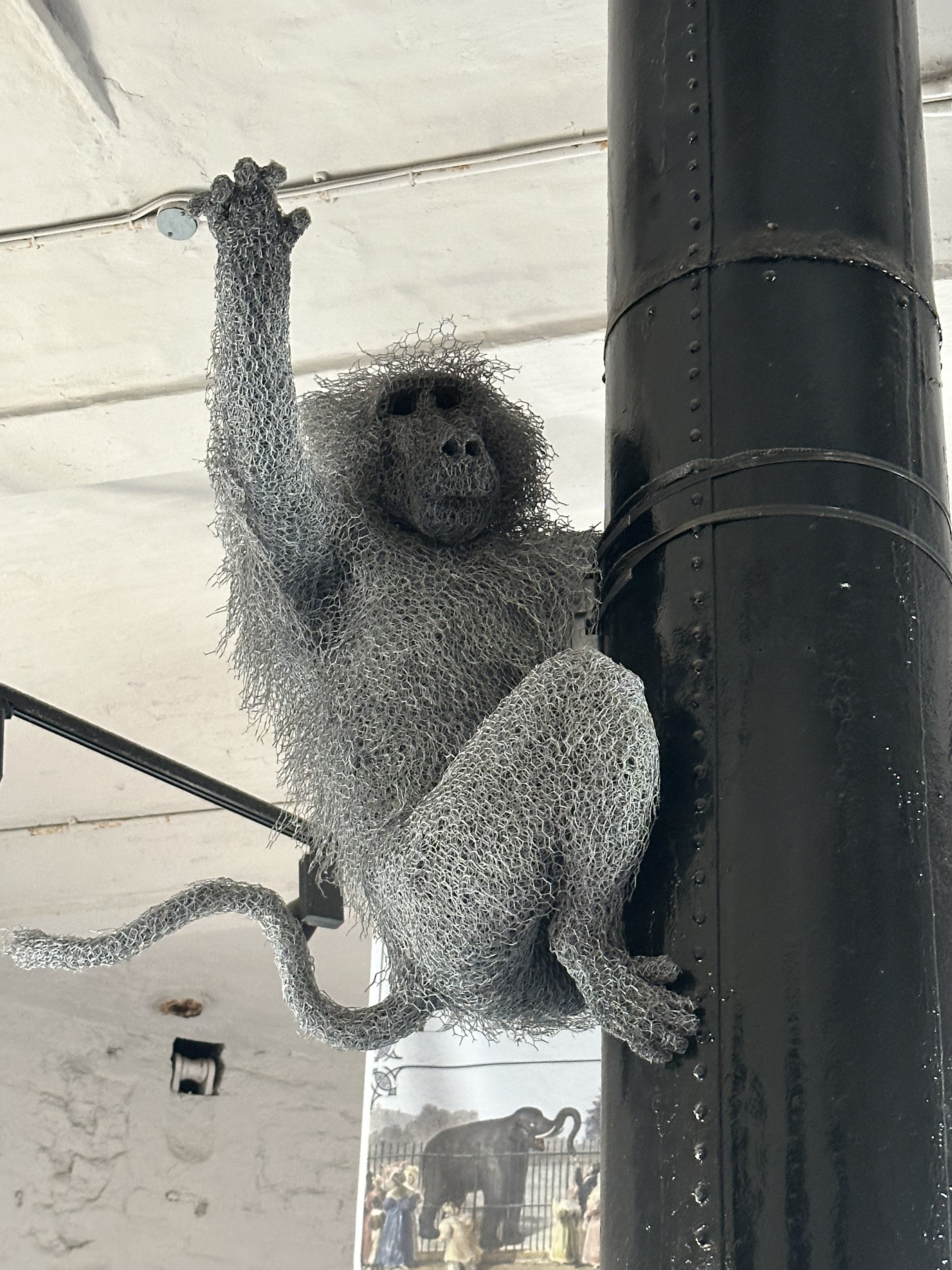
Metal monkey sculpture.

Artistic metal sculptures depict some of the animals that used to be kept at the tower of London; these animals from far-off places were given as gifts and kept in the tower, which was not always the best habitat.


Observatory ball.  Every day at exactly 1:00 pm Greenwich Mean Time, this red ball on the top of the observatory drops. It is visible from the Thames and allows ships to synchronize their clocks with the official time.

The Greenwich Royal Observatory   A little south of London is the Greenwich Royal Observatory. This observatory marks the location of the Prime Meridian, which is the line that is used across the world to count as the start of a “day”. The museum teaches about the astronomers and mathematicians who worked there, and the long endeavor to develop a method of calculating longitude accurately from a ship. This project took decades, spurred on by a monetary award offered by the British government.  There were many attempts along the way that weren’t successful but nevertheless made scientific and engineering contributions. Ultimately the solution was to develop a clock that would be accurate within seconds when aboard a ship. You can read more about this in Dava Sobel’s book Longitude.

Royal Observatory.. This line marks the prime meridian.

It’s striking how the financial support of the English government was critical to both the scientific advancements as well as the social infrastructure of marking time consistently across the globe.  This is an early example of a federally funded grant, and it accrued power to England.

Houses of Parliament. This photo was taken in one of the only places we were allowed to take pictures.

The Houses of Parliament . Unfortunately, we were visiting during Easter week, which is a holiday in England, so we couldn’t see the houses of parliament in action. But we still could enter the space and take an audio tour. British Parliament includes both the House of Lords and the House of Commons. Originally these parliamentary roles were only open to men of wealth, but later they opened up to “commoners”, and today the only real political power lies in the House of Commons. But we also learned that the House of Lords plays an important negotiating role, precisely because they do not have the same level of power as the House of Commons. The rooms dedicated to the House of Lords are also a lot more ornate than the rooms for the House of Commons!


The 80’s: Photographing Britain at the Tate Britain.  This powerful exhibit depicted several major class struggles in the 70’s and 80s, including union strikes, the coal miner’s strike, and the struggle for recognition of the LGBTQ+ community.


Dickens Museum

Charles Dickens Museum . This museum is built in one of the houses where Dickens lived in the 1800’s, in a beautiful and somewhat secluded neighborhood of London. We learned that Dickens himself came from a financially insecure background, which was blamed on his father’s inability to manage his debts. At age 12 Dickens was sent to work in a factory doing grueling and uninspiring work. This undoubtedly motivated the themes in his novels, which portrayed the poor in a positive light and championed their cause. We also learned that Dickens’ had a flamboyant and entertaining personality. He enjoyed financial success during his lifetime due to the popularity of his writings, and he frequently entertained at his house and performed his books.


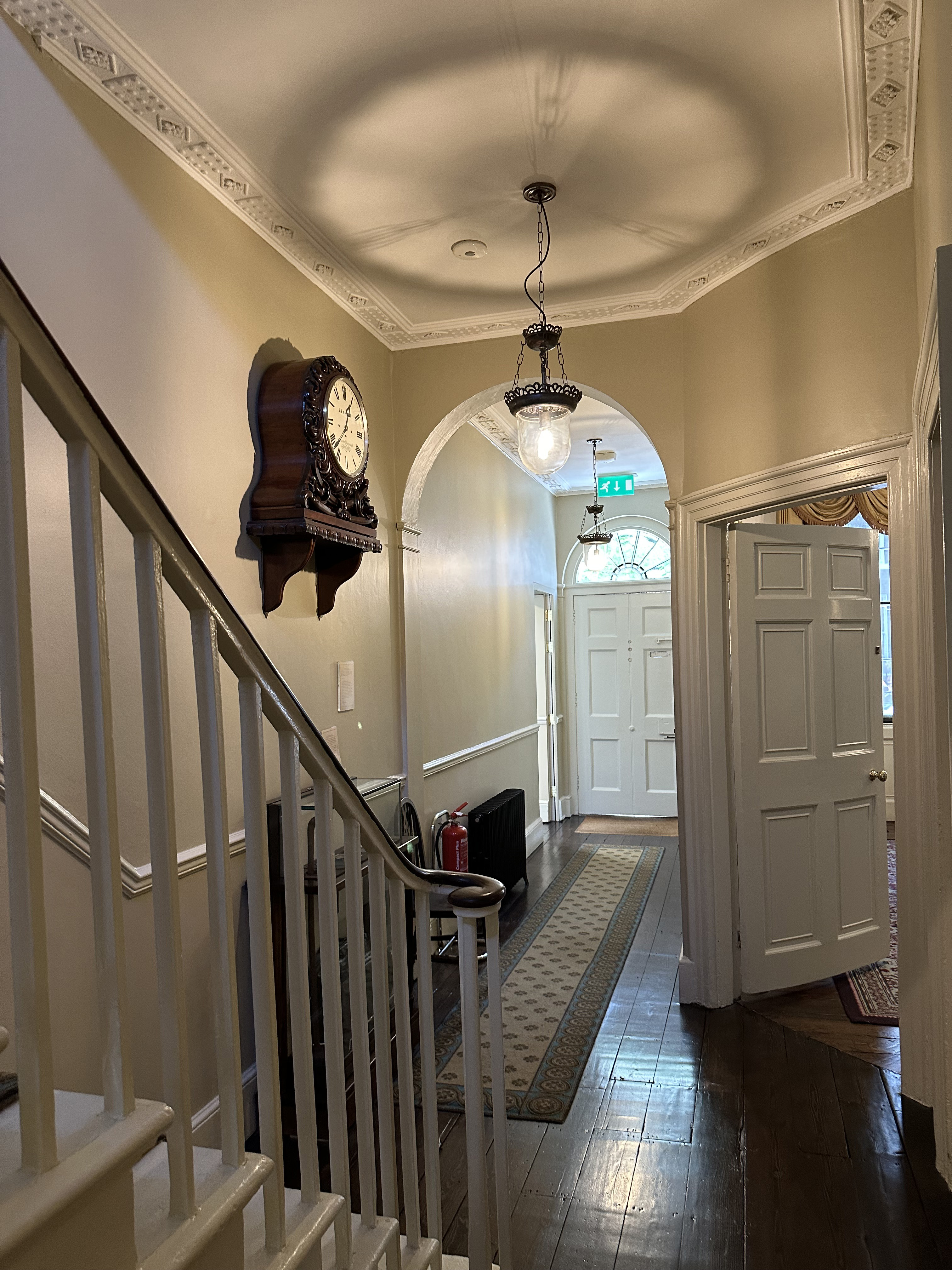
Handel House. The room where Handel entertained visitors and musicians, next door to the room where he did most of his composing.

Handel and Hendrix House .  In an unusual twist of fate, two major musicians lived in neighboring houses in London at very different times. The composer George Frederic Handel rented a house in the early 1700s, where he composed his famous Handel’s Messiah and many other works, and from where he developed his career in London. 
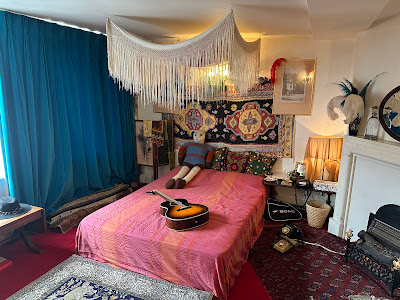
The bedroom of Jimi Hendrix’s flat.

Two centuries later, Jimi Hendrix rented a flat next door where his career took off in the 1960’s.

 Note: Next week look for Jennifer's post about their day trip from London to Oxford.


Monday, May 6, 2024

BASQUE SPAIN: Donostia-San Sebastian, Guest Post by Jennifer Arnold

Jennifer in Donostia (San Sebastian) Spain.

My daughter Jennifer, a professor at the University of North Carolina, recently traveled to Spain for a professional meeting and had a little extra time to be a tourist and explore. I thank her for sharing her photos and impressions of the Basque city of Donostia-San Sebastian. She writes:

Basilica of St. Mary of the Angelic Choir.

I travelled to San Sebastian in April 2024 to visit BCBL (The Basque Center on Cognition, Brain, and Language). It was a short trip, but I was pleased to be able to walk around the beautiful city a little, and to visit the museum of San Telmo, which focuses on Basque history.

Hotel on a plaza; the doors have numbers that apparently were used when they used to have bull fights in the plaza and people would rent the rooms to watch the fights.


San Sebastian (“Donostia” in Basque) lies on the north side of Spain in Basque country near the French boarder. I arrived in the San Sebastian airport, which is about 30 minutes from the city. When I asked my taxi driver what I should try to see, he said really the main attraction is food. 

Pastries.

He was right – the culinary experience in San Sebastian was a highlight.


Pinxos.

My host took me out for “pinxos” the first night, which is the local style of tapas. One goes from bar to bar, sampling one or two specialties at a time. The typical pinxos you see everywhere are pieces of bread with spreads and seafood piled on top, often anchovies, sardines, or shrimp. My host also took me to Bar Nestor, a famous place that makes tortilla española (a sort of omelet with potatoes).  They only make one tortilla for lunch, and one for dinner. To get a slice, we had to show up at 7pm on the dot to get our names on the list. They told us to come back 45 minutes later, when we found a lucky group of people clustered outside. They called our names one group at a time to come in and be served. 

Basque cheesecakes.

Another specialty of the area is Basque cheesecake, which is very dense and creamy, and kind of liquidy in the middle. We also enjoyed sit-down meals at local restaurants, both traditional Basque and innovative Japanese-Basque fusion. 

Asparagus--white and green.

I happened to arrive at the brief but celebrated time of the white asparagus, which was featured in many restaurants (it’s delicious).


View from Monte Iqueldo--reached by a funicular.

The city is also beautiful and easy to enjoy on foot. It sits on a bay, with beautiful walks along the sea. The city is very compact, with many apartment buildings instead of houses, and diverse architecture.

Building with arches.

Plaza.

Modern building at the University of the Basque Country.

It seems to be a very family friendly place to live, with countless beautiful refuges nestled between the apartment buildings, including playgrounds, plazas, green areas and ponds. I saw lots of people outside, many with their dogs, who were often wearing collars and little jackets and allowed to roam within sight of their owners.


San Telmo Museum.

On my last day it was rainy so I visited the San Telmo museum, which is a good way to get to know more about Basque history. 

Armor.

Dictionary in Basque, Spanish, and Latin.


Painting by Antonio Ortiz Echague (1883-1942), “Mi mujer y mi hija a la distancia”


They have ancient artifacts and displays about Basque culture from the middle ages, the enlightenment, to modern times. They also have a selection of art by Basque artists. As we left the museum, we saw a quatrilingual “Exit” sign in Basque, Spanish, English, and French.

Exit sign in four languages.


Monday, February 26, 2024

TWO WEEKS IN KENYA: Nairobi Foods and Crafts, Guest Post by Jennifer E. Arnold

Roadside basket shop, Nairobi, Kenya.

Many thanks to my daughter Jennifer for her report on her family’s recent trip to Kenya. As Art and I followed their adventures, we were reminded of our trip to Africa in 1971, when Jennifer was a baby. Here is her report on the foods and crafts in Nairobi today.

We stepped out of the Jomo Kenyatta airport in Nairobi on January 2, 2024, and were immediately hit by the warm humid air. The capital of Kenya, Nairobi sits just south of the equator, and has roughly equal days and nights year round. We were visiting our friends Lisa and Ashu, who assured us that January is supposed to be the dry season – and mostly it was, but with perhaps unsurprising climate chaos, January 2024 was unusually rainy. Lisa picked us up at the airport and drove us to their house on the new toll expressway. The toll booths had signs for different kinds of payment, including cash, Mpesa, and some other types I didn’t recognize.

Ingenious umbrella used by the boda (motorcycle) drivers.

One of the biggest adjustments was learning how to use the Kenyan mpesa system. Mpesa is an electronic payment system, similar to Venmo or PayPal, but much more widespread – everyone has it, and it’s the default method of payment. Ashu loaned us a Kenyan phone that was already set up to use Mpesa, and we used it for everything from grocery store purchases to buying crafts from a street vendor to paying tips to our waiters. Some larger stores also accepted credit cards. 

Grocery stores were more or less like what we see in the US, but we were excited to see the range of new foods. They had many fruits not widely available here (mango, papaya, passion fruit, custard apple – which is similar to the Chilean cherimoya), and there was a wide range of Indian foods. In the produce section there was an assistant who weighed and tagged the produce before you went up to the counter. Our friends introduced us to “Crackies”, a spiced sweet potato chip (delicious! And unfortunately not sold in the US).

Roadside metal sculpture shop.

One of the first things we noticed is that some commercial activity takes place in extensive roadside shops. I can’t call them “stands”, because they sometimes go on for blocks. 

Roadside plant shop.

We saw both crafts and also the sale of regular household goods like beds or building materials. We learned from our friends that almost anything can be purchased for delivery by boda (motorcycle). Nairobi also has a thriving Uber industry, which we used several times.

Street-side hand washing station outside a restaurant.

We saw consistent public messaging about hand washing, and one restaurant provided a station outside for you to use even before entering the building! We ate at numerous excellent restaurants, including Indian food, Swahili food, pizza, and salads, meats, and juices. My mom remembered that about 50 years ago in Nairobi [see
https://theintrepidtourist.blogspot.com/2021/04/the-africa-trip-50th-anniversary.html] it wasn’t considered safe for travelers to eat raw vegetables in restaurants, but nowadays it is perfectly fine.

Crafts sold at the Masai Market.

Kenya has a strong craft and art industry, a few examples of which are shown below. In addition we visited the Masai Market where people sell a wide variety of souvenirs and local goods, as well as a fabric shop where they sold traditional Kikoi, Kitenge, and Khanga fabrics.

One thing you won’t find in Kenyan stores is grocery bags. We were thrilled to learn that Kenya banned single-use plastic bags in 2017. This is one of the strictest bans worldwide, which means you can’t even enter the country with such bags. This forced us to examine our suitcases before leaving home to make sure we weren’t wrapping our shoes in old grocery bags. Instead you can bring your own shopping bags, or purchase a reusable shopping bag in grocery stores. In smaller stands they sometimes offer small paper-fabric shopping bags.

Kitengela Glass Shop


Kitengela glass shop.

The Kitengela factory is located about 50 minutes from the city of Nairobi, but you can visit their shop in the city at the Westgate shopping center.

Rugs and Weaving

Marathon Weaver rug shop. (https://www.facebook.com/MarathonWeavers)

We visited two rug shops on Ngong road in the neighborhood of Karen (named after Karen Blixen who wrote “Out of Africa”). These shops were in the same area as multiple furniture stores, which were displaying their goods on the side of the busy road. The street was busy with many workers and shoppers (plus goats wandering around), not put off by the fact that it was raining on the day we were there. 

Loom and rug in progress in the Jireh workshop. (https://www.facebook.com/Jirehhandwovencraft/)

At the Jireh business we got to see their workshop and the amazing process of creating a large rug, which involves climbing the loom like Spiderman. The entire business is run by a family - a mother and her grown children. Getting to the workshop was an adventure that was solved in what seems to be a uniquely Kenyan way. We couldn’t find the shop, so we called them. One worker came out to the main road to meet us, got in our car with us and directed us to the workshop!

 Kazuri beads

Beads in the making.

This business (
https://kazuri.com/) was founded in 1975 with the goal of employing single mothers in need of employment. We got a tour and saw how they make the beads, bake them in a kiln, glaze them, and again bake the glaze all on site.


Beads in the making.