|
| Zebra at Etosha National Park, Namibia. |
With many thanks to our friend Owen Floody, who was my husband's field partner on our trip to East Africa in 1971. Art and I have not been back to Africa since then, but Owen has made numerous trips in recent years and written about several of them for The Intrepid Tourist. His latest report chronicles a trip to Namibia—his third—and is accompanied by his excellent photographs.
 |
| Where the Namib desert meets the sea. |
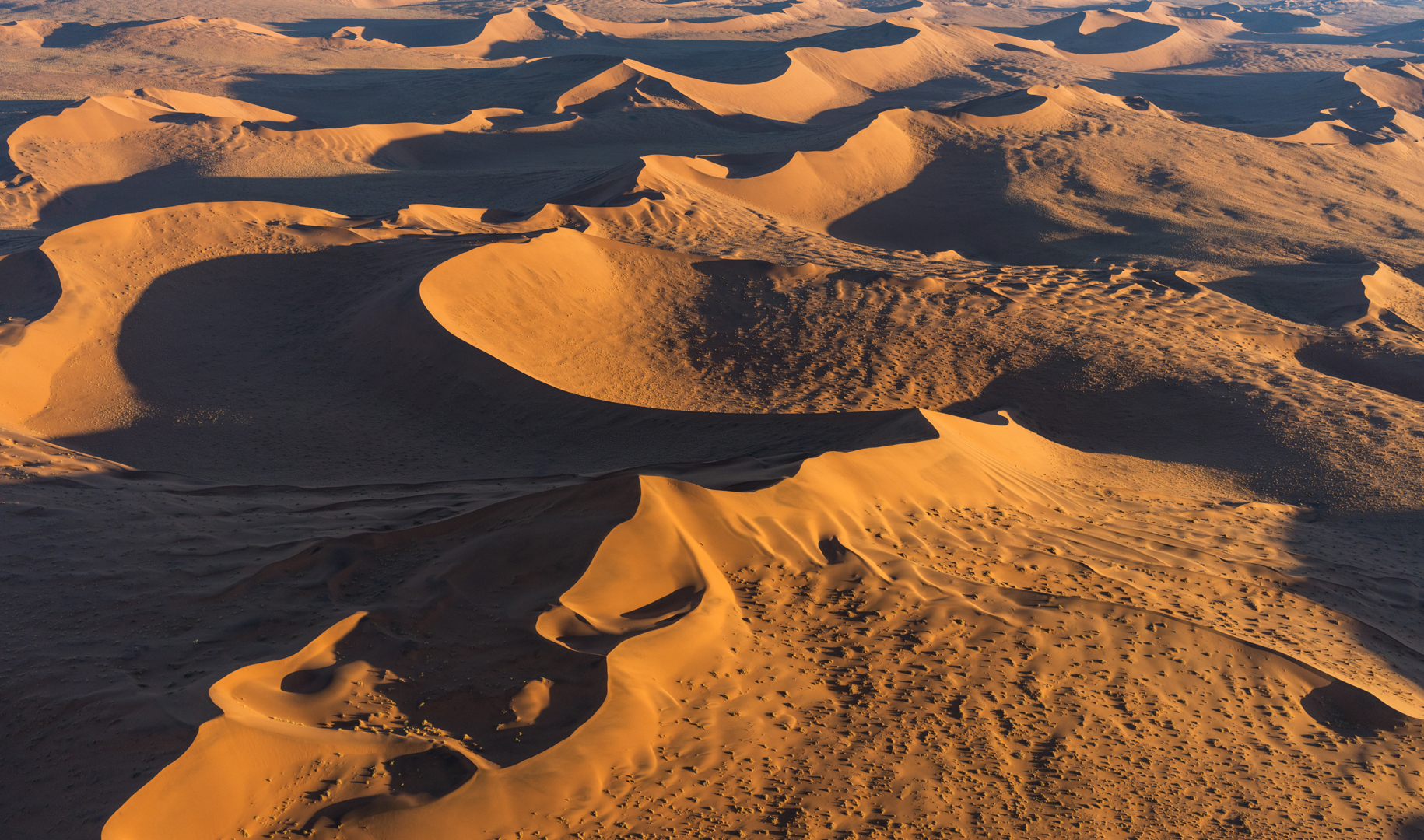
My previous post began with my description of a recent photo-tour of Namibia and ended as we flew by small plane from the red sand dunes of Sossusvlei to coastal Swakopmund, marking the tour’s transition from an emphasis on landscapes to one on wildlife. The flight itself provided a second look at the shapes and distributions of the Sossusvlei dunes. Particularly impressive was how abruptly the dunes end and the ocean begins. In addition, the flight permitted us to look down on one of the shipwrecks that give the Skeleton Coast its name. Finally, we viewed an impressive bank of mist extending inland from the ocean, as is very typical of this area.
These mists limited our activities in the Swakopmund area. One victim was a planned excursion to Walvis Bay in search of flamingos and other water birds. But we did see quite a few flamingos from the plane. And the mists could not completely derail a Living Desert tour that exposed us to a few of the small creatures (chameleons, geckos, skinks, and spiders) able to make the dunes their home.
 |
| Gecko. |
From Swakopmund, we continued on to our last two stops, Etosha National Park (in northern Namibia) and the Erindi Private Game Reserve (about midway between Etosha and Windhoek, our endpoint). Even though we saw wildlife earlier in the tour, these were the areas that we expected to be the most wildlife rich.
 |
| The Etosha Salt Pan. |
Etosha is the third largest of African national parks at 8600 sq mi, closely approaching the size of New Hampshire. Contained almost entirely within it is the Etosha Pan, a salt pan of about 1840 square miles. Etosha is dry, though average rainfall levels vary seasonally and regionally. Due to its aridity, much of the wildlife viewing in Etosha occurs at waterholes, some natural, others man-made. A few of these (including one a few feet from my room) are lit at night, permitting interesting views of a great variety of animals as they (very cautiously) visit to drink.
 |
| Giraffes and rhinos at the water hole. |
Of the waterhole visitors, zebra are so photogenic as to be hard to beat. Nevertheless, the most prized nighttime visitors were the black rhinoceros and giraffes: I did not expect to see this many rhinos and was very pleased by the turnout. And nothing could have beat the show put on for us by a large herd of elephants during a daytime waterhole visit. All of them, but especially one expressive and irresistible baby, had a grand time frolicking in the dust, water and mud.
 |
| Mother elephant and her calf having a mud bath. |
Even though these sightings were great and made our visit to Etosha memorable, sightings of some other animals, especially big cats, were scarce. It was suggested that this reflected eastward movements of some animals in response to conditions that were unusually arid even by Etosha's standards.

Mother cheetah and her cubs.
We
hoped that these gaps would be filled at Erindi. And, to some extent, they were, as we were
able to get good views of cheetah (6th image) and lions there. Unfortunately,
at least some of these sightings came at what I considered unacceptable
costs. One of the benefits of private
reserves is the ability to drive off road and at night. And done judiciously, I think that these can
be valuable. However, our efforts to
track a hunting mother cheetah suggested to me that the drivers at Erindi
(which were not those attached to our tour) were prone to engage in two
unethical practices. First, they
frequently plowed right through any shrub or small tree that might otherwise
have required a detour. Secondly,
several vehicles maintained positions close to and on at least three sides of
the hunting cat. It is hard for me to
believe that these intrusions didn’t compromise the hunt (which did end
unsuccessfully). One of the drivers
claimed that he knows the animals individually and well and would have broken
off the pursuit if the animal was distressed. Perhaps this is true, but I am unconvinced. Since many of the cats are radio-collared, it
should be possible to collect data on the outcome of hunts accompanied and unaccompanied
by safari vehicles. If the success rates
are similar, I will praise the sensitivity and skill of the drivers. Otherwise,
I will give Erindi a pass, as I did on our remaining game drive.
Please bear in mind that this incident occupied no more than two hours of a 17-day trip. Therefore, anyone attracted to Namibia but concerned about the incident should recall the saying about throwing out the baby along with the bathwater. Taken together, the sights and experiences of this trip for me elevate further a destination that already was one of my favorites. In my opinion, tweaking the itinerary would be an appropriate response, staying away would be overkill and unnecessary.
Part I of Owen’s report appeared on July 3, 2023.