Monday, January 20, 2025

MARY CASSATT AT WORK, Legion of Honor Art Museum, San Francisco, CA

A Kiss for Baby Ann, No. 3, 1897, pastel by Mary Cassatt. Legion of Honor Art Museum, San Francisco, CA.

Mary Cassatt, known for her sensitive paintings of women and children, was both the only American artist and only woman artist to exhibit with the Impressionists. In a stunning exhibit at the Legion of Honor Art Museum in San Francisco, the breadth of her work is displayed—drawings, prints, oil paintings and lustrous pastels. 

Woman in a Black Hat and Raspberry Pink Costume (detail), pastel, ca. 1905.

In December, when I was in the Bay Area, I went to the exhibit with my family. Although I was familiar with some of the paintings from my art history classes in college and from visits to other museums, I had never had the opportunity to see so many pieces up close and to appreciate Mary Cassatt’s work over the span of her lifetime (1844-1926).
Under the Lamp, aquatint and soft ground etching, 1883.

Before entering the galleries, we prepared ourselves by watching an excellent video playing in a room just inside the ticket area. (Timed tickets are required to see the exhibit.) In the video we learned about Mary Cassatt’s background as the daughter of a wealthy Philadelphia family. Like many young women of the time, she attended to art school. But unlike other young women who went on to become matrons of society, Mary Cassatt was determined to become a successful professional artist. She moved to Paris and pursued her career there. She never married.

At the Loge, 1878.

In the video, selected pieces of art were discussed by experts. We learned, for instance, to look carefully at the painting of the woman at the opera to see the gentlemen in the opposite box just as intently looking at her!

Portrait of Mrs. Robert S. Cassatt, the Artist's Mother, ca 1885. 

We also learned about Mary Cassatt’s relationships with her family, who initially disapproved of her art career. Later they joined her in France. Her mother and sister appear in some of her paintings.  Mary Cassatt also used paid models for her work.

Clarissa, Turned Right with her Hand to her Ear, 1890-1893, Pastel.

Detail.

While much of Mary Cassatt’s work is in oil paint, many of her most vibrant portraits are drawn with pastels. The advantage of pastels is that the color is pure pigment, not diluted with oil or another medium. A close-up look at her pastels reveals the freedom and looseness of the strokes and shimmer of the overlapping color. In contrast, the faces of her figures are more carefully modeled.

Prints, dry point and color aquatint.

I had not previously appreciated Mary Cassatt’s skill as a printmaker. In the exhibit we see examples of dry point engravings as well as aquatint prints. Cassatt believed that printmaking was the ultimate instructor in drawing. She said, "That is what teaches one to draw."

Family Group Reading (detail), 1898.

Many of the Impressionists focused on outdoor scenes in their paintings and worked in "plein air". While most of Mary Cassatt's art depicts of interior scenes, in some cases, as in Family Group Reading, she places her figures in an outdoor setting.

On a Balcony, 1878-79.

The most impressive thing about Mary Cassatt’s depictions of people is the expressions on the faces. She manages to capture their inner feelings and interpersonal connections. In Mother About to Wash a Sleepy Child, we sense the tenderness between mother and baby.

Mother About to Wash her Sleepy Child, 1880.

On the day of our visit, after viewing Mary Cassatt at Work, we ate a tasty lunch in the museum cafe, and then explored the permanent collection in the main floor galleries, ending in the room with paintings by Mary Cassatt's comrades in art--Monet, Manet, Renoir, Cezanne, Pissarro, Degas. Mary Cassatt at Work is an enlightening exhibit.  I gained a new appreciation of her as an innovator. I saw a talented woman who was determined to forge a career at a time when women were not encouraged to do so. If you don't get to see the Mary Cassatt exhibit at the Legion of Honor before it closes January 26, 2025, there are many other museums where you can see her work.

The Long Gloves, 1886. Pastel.


REMEMBERING WILL ROGERS’ HOUSE-- Lost in the Palisades Fire, Los Angeles, CA

Will Rogers' House, Will Rogers State Historic Park, Los Angeles, CA.

“I never met a man I didn’t like.”—Will Rogers, cowboy, humorist, film star and commentator of the 1920s and 1930s.  He was a quintessential American.

Will Rogers’ house in Will Rogers State Park in Los Angeles, California, was one of the many victims of the recent catastrophic Palisades wildfire, which burned more than 23,000 acres and destroyed more than 1000 homes. It is gone forever. The park, with its historic house, horse stables, polo field, picnic area and hiking trails has been a favorite place to visit during the almost fifty years I have lived in Southern California. I loved the exhibits in the Visitor Center and the black and white films of Will Rogers doing rope tricks for the movies and telling jokes as a popular public speaker and commentator. I loved the guided tours of his home, filled with artifacts of his life—his saddle, colorful blankets, sculptures, and comfortable furniture. Every volunteer docent had their own stories to tell of Will Rogers and his family as they led the tour through the rooms of the house. I loved watching polo players on the field in front of the house. I loved hiking on the trails past the horse barns and corrals up to Inspiration Point, with its spectacular 360 degree view—from the Pacific Ocean to downtown Los Angeles. The wildflowers and native shrubs in the park will grow back in time, but the house and mementos of Will Rogers’ life can never be replaced. They remain only in pictures and our memories.

I have written about Will Rogers’ State Park twice on this blog, in March 2014 and June 2020. I am reposting here my report from 2014. 

Will Rogers House, Will Rogers State Park
When I have visitors in Los Angeles, one of my favorite places to take them is Will Rogers State Historic Park, the former home of the famous cowboy, humorist, film star and commentator of the 1920s and 1930s.  Tucked into the foothills of the Santa Monica Mountains just north of Sunset Boulevard, the ranch style home looks out over a broad lawn (once used by Will’s friends to practice golf) and a large field where Will and his friends played polo. The field is still used for weekend matches and occasionally we take a picnic and sit on the sidelines and watch. A short walk from the house leads to the stables where Will once kept his horses.  According to Will, “A man that don’t love a horse, there is something the matter with him.” Today one can go for horse riding lessons and trail rides in the park.

Horses in one of the corrals
On a recent Sunday when my brothers were in town, we spent an afternoon at the park.  We began at the small museum adjacent to the house.  People of our parents' generation have fond memories of listening to Will Rogers on the radio, seeing him in movies, and reading his newspaper columns, but for most of us today Will Rogers is a historical figure. Will was born in 1879 of Cherokee and European descent. He was raised on a ranch in Oklahoma where he learned to ride and rope, skills that led him to perform in Wild West shows, and eventually brought him to Hollywood. He died in an airplane crash in Alaska in 1935. In the museum are photographs and exhibits and a wonderful video showing his amazing rope tricks and clips from some of his speeches. 
At Christmas time the house is decorated by volunteers
Thursday through Sunday, volunteers lead free tours of Will Rogers’ house, providing an opportunity to see his collection of Western art, hear some of the many stories about his life, and get a sense of the casual and comfortable style of life he preferred.  Despite his fame and wealth, Will did not live the glamorous life of other movie stars of the time. Instead, he entertained with casual barbecues and sing-a-longs and decorated his house in a homey, ranch style. 
View of Los Angeles from Inspiration Point, Will Rogers State Park
After our tour we set out for a walk on the loop trail up to Inspiration Point.  Following the dirt path past the stables, we wound our way uphill.  As we passed the corrals, a few friendly horses came over for a pat on the nose. Although the trail is not strenuous, I chose to loop the other way and met the rest of the group on their way back down.  I have been to the top many times and the view of the city and Pacific Ocean is impressive.
Will Rogers lived on the ranch from 1926 to 1935
Perhaps Will Rogers’ most famous quip was: “I never met a man I didn’t like.” His house and ranch reflect his generous spirit and love of the outdoors. After Will Rogers died, his daughter donated the house and ranch to the state of California so that it would be preserved as a state park. We are lucky she did.
For directions and information about visiting the park go to www.parks.ca.gov/willrogers .

Monday, January 13, 2025

ASTRA LUMINA – MUCH MORE THAN A LIGHTED GARDEN, Guest Post by Caroline Hatton

Astra Lumina exhibit, Seattle, WA. Start gate or "Astra Archway."

My friend Caroline Hatton, a children’s writer and frequent contributor to this blog, took these photos in
Seattle in December 2024 on a phenomenal walk at Astra Lumina, an "enchanted night walk among the stars," at the Seattle Chinese Garden. The same exhibit is apparently available in Dallas, Gatlinburg, Los Angeles, Philadelphia and Seattle until January 31, 2025.

What sets AstraLumina a galaxy apart from other lighted garden events is the bold vision behind an exuberant music-and-lighting show. Everything is big and nothing is static. This gives the experience its power to lift the spirit. A 3-minute video overview shows a sample of every art installation along the one-mile night walk. The video does such a good job giving an idea of what to expect, especially if it is played with the sound on and the volume up, that I share only still shots.

The "Stellar Visions" uplifting visuals and pulsing music sweep away two visitors.

My favorite of the nine art installations was “Stellar Visions.” In the screenshot above, the silhouettes of two visitors on the right give an idea of how big and how high the giant lens-like screen was, as if pointed at the heavens. Projected onto it, a cosmos-inspired video to uplifting celestial music swept me away on a virtual journey through space.

My next favorite was walking through the utterly cool special effects of “Stardust Rays.” It felt like floating through interstellar currents even though my feet never left the Earth.

Cosmic Choir, detail.

With nine areas sufficiently different in mood, visuals and sounds, chances are everyone can find favorites and count on feeling transported to distant star fields. The many photo opportunities along the way were a nice bonus.


In the Cosmic Choir, I saw a red lantern, but this is what my phone captured.

The lantern turned purple, but this is what my phone captured.

For me, Astra Lumina was an exciting, stirring experience, not one to bring me serenity. The bigness of it all boosted my ambition, optimism, and happiness. At the Astra Lumina website, tickets seem available only until January 31, 2025, but this is not the first year of the show, so perhaps it won’t be the last.

A lit plant as I saw it.


Monday, January 6, 2025

SANGRE DE NOPAL/BLOOD OF THE NOPAL: Exhibit at the Fowler Museum, UCLA, Los Angeles, CA

Sangre de Nopal exhibit at the Fowler Museum, UCLA.

One of my favorite museums in Los Angles is the Fowler Museum on the campus of UCLA, with its focus on art and material culture, primarily from Asia, Africa, and the Pacific, as well as the Americas. In mid-December I made an excursion to the Fowler to do some holiday shopping in its excellent gift shop, and while I was there made a quick visit to the exhibit Sangre de Nopal/Blood of the Nopal: Tanya Aquiniga and PorfirioGutierrez en Conversacion/in Conversation, which is on view in one of the four museum galleries. While we were there we saw two groups of school children who had come to see the exhibit and participate in the hands-on displays.

Somos una tela continue (We are a continuous cloth), 2023 by Tanya Aquiniga, 2023. Found objects and stones from the Los Angeles River, low-fired terra cotta, cotton dyed with terracotta, and cotton rope.

The exhibit features fiber artists Tanya Aquiniga and Porfirio Gutierrez as well as Oaxacan textiles from the Fowler Museum collection. 

Oaxacan textiles from the Fowler collection. Installation inspired by the temporary devotional structures called Lis Dxan erected during Holy Week in Zapotecan communities.

Here are some of the items on display.

Somos Mujeres (We Are Women) by Tanya Aquiniga, 2024. Terra cotta, nickel, epoxy, cochineal dye, cochineal insects, cotton rope. 

Nopal by Tanya Aquiniga, 2017. Abaca pulp, clay, alpaca, flax, succulents, iron, horsehair, cochineal, copper, gold, human hair.

Emotional Body by Tanya Aquiliga, 2023. Cotton rope and low-fire terra cotta. Video.

Detail of Emotional Body.


Sangre de Nopal/Blood of the Nopal: Tanya Aguiñiga & Porfirio Gutiérrez en Conversación/in Conversation 
is organized by the Museum of Contemporary Art Santa Barbara and developed in collaboration with the Fowler Museum at UCLA. It is a multi-site project offering an expanded understanding of the scientific and Indigenous origins of cochineal, a red dye developed by the Zapotec peoples.

What is cochineal?

First cultivated by the Zapotec peoples around 500 B.C., cochineal is derived from an insect that lives on the opuntia (prickly pear) cactus. Its chemical ingenuity, stability, and chromatic intensity changed the course of art around the world. Despite the global scale and impact of cochineal, its spiritual, medicinal, and technical origins within Indigenous Mexican communities remain little understood. Sangre de Nopal offers a case study in multi-generational innovation, acknowledging the scientific knowledge and cultural heritage embedded in the cultivation of cochineal. (From the Fowler Museum website.)


The exhibit will be on view at the Fowler until January 12, 2025. I am glad I got to see it before it closes.

Entrance to Fowler Museum of Cultural History, UCLA


Wednesday, January 1, 2025

HAPPY NEW YEAR 2025 from THE INTREPID TOURIST

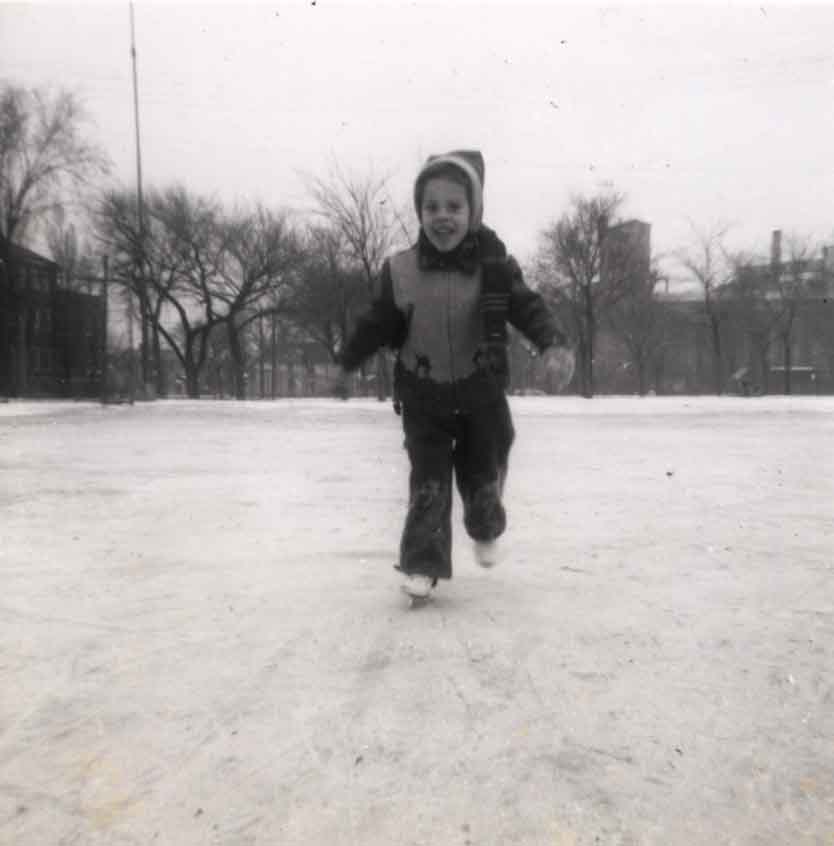
Caroline, ice skating at Bottineau Park in Northeast Minneapolis, 1950.

"By New Year’s Day, the pine needles of the Christmas tree are dry and brittle. It is time to take the tree down. After the lights and ornaments are removed and boxed for next year, we take the tree outside to the roof deck, propping it up in the snow. Decorated with strings of bread cubes and cranberries, it is ready for the birds to enjoy. With the excitement of Christmas over, it is now time to write thank-you notes and to enjoy skating at Bottineau Park, sledding at the Columbia Park golf course, and other winter activities."

From Chapter 7: Family Christmas at NENH, SETTLEMENT HOUSE GIRL: Growing Up in the 1950s at North East Neighborhood House, Minneapolis, Minnesota.

I have fond memories of celebrating the holidays when I was a child in Minneapolis. Now, many years later, from my home in California, I send best wishes to you and all my faithful readers.

HAPPY NEW YEAR 2025


Monday, December 23, 2024

HAPPY HOLIDAYS from THE INTREPID TOURIST

Scheaffer family in apartment at NENH, 1950.

"On Christmas Eve, after my brothers and I are asleep, my parents arrange “Santa’s” gifts under the tree. On Christmas morning, after everyone is awake, my father turns on the tree lights and gives the signal to enter. We rush in, each going straight to our own pile. Santa’s gifts are unwrapped and it is obvious who they are for—a doll for me, a train for Steve, stacking blocks for Peter, a stuffed toy for Tom."  

From Chapter 7: Family Christmas at NENH, SETTLEMENT HOUSE GIRL: Growing Up in the 1950s at North East Neighborhood House, Minneapolis, Minnesota.

 I have fond memories of celebrating Christmas when I was a child. Now, many years later, from my home in California, I send best wishes to you and all my faithful readers.

HAPPY HOLIDAYS

2024


Monday, December 16, 2024

AUSTRALIA: IT’S FOR THE BIRDS (SERIOUSLY!) Guest Post by Caroline Hatton

An emu, as tall as me (5'2" or 1.57 m)

My friend Caroline Hatton, a children’s writer and frequent contributor to this blog, took these photos in Australia
in November-December 2023, springtime Down Under. She wrote this blog post to help our mutual friend Sara Kras dream up her own upcoming trip to Australia.

Laughing Kookaburra (the size of a crow)

In Australia, my husband Bill and I were lucky to see wild koalas and kangaroos, echidnas, wombats, wallabies, and more. We also saw birds, of course. What I hadn’t expected was how they made me feel: not only delighted, but overwhelmed with enchantment.

Like elsewhere on the planet, birds go about their business around towns, urban parks, and farmland. In Australia, many species display bright colors or exquisite pastels, unusual shapes or make funny noises. Australian birds are spectacular!

We visited the states of Victoria, Tasmania, and New South Wales, but most bird sightings, and the best ones, were in Victoria. The photos in this post show only some of the diverse species we encountered. 

Superb fairy-wren (smaller than a sparrow).

The first attraction we visited in Australia was the Healesville Sanctuary, an hour-and-a-half drive from Melbourne, to see koalas, kangaroos, and other wildlife celebrities up close and calibrate our eyeballs to spot them in the wild. But what hypnotized us was a brilliant blue gem on the ground, a wild, tiny, well-named superb fairy-wren.

Australian ibis.

At lunchtime at the sanctuary, a wild Australian ibis startled us when it landed on our picnic table with a loud clunk. Despite the intimidating size of its weapon-grade beak, its attempts at swiping our sandwiches failed.

Masked lapwing (the size of a gull).

From Healesville, we drove to Geelong, the start of the Great Ocean Road along the south coast. On the beach, I gazed endlessly at masked lapwings.

The next morning in Geelong, we visited the Narana Cultural Centre to see Aboriginal artworks indoors, as well as captive, tame wallabies in an outdoor enclosure. Other residents included emus, flightless birds smaller than ostriches. In the photo at the top of this blog post, I caught one snatching a bite of salad after eating breakfast cereal, some of which stuck to its nostrils.

Crested pigeon.

Wild birds that stopped by included incredibly pretty crested pigeons.

Australian king parrot.

From Geelong, we drove west along the Great Ocean Road from one scenic viewpoint to the next and arrived at Kafe Koala in the afternoon. The parking lot welcome committee included “wild” Australian king-parrots. Two of them perched on visitors emerging from the Kafe. The birds never got any food, but the tourists got many selfies. We didn’t get to hear how the king-parrot “makes a loud piercing metallic ‘squeak’ like a forced metal hinge.”

Crimson rosella. (Photo by Bill Hatton)

In the same parking lot, my husband Bill caught one skittish crimson rosella… on camera. Afterwards, we walked up the adjacent dirt road far enough to see five wild koalas!

Galah.

Farther west along the Great Ocean Road, flocks of an exquisite pastel parrot grazed on sidewalk grass: the galah. I couldn’t believe that some consider it a pest.

Purple swamphens.

Purple swamphens wandered near grassy ponds in Melbourne parks and in small towns on the Great Ocean Road. I wondered whether each one goes through life never suspecting that it has a snow white back end. Bird-identification books should show photos taken from behind!

We left the Great Ocean Road at Warrnambool and turned inland, heading north to the vacation town of Halls Gap in the low Grampian Mountains. There we saw dozens and dozens of wild kangaroos, wild emus in pastures and on the golf course, and the only wild kookaburra in almost a month in Australia (see the second photo from the top of this blog post). It never made a sound, unlike the others we’d heard laughing, perhaps because we could not find them. This one, I spotted by stopping every few steps along a trail, for a visual scan of the forest all around me.

Sulphur-crested cockatoo.

Acting like city pigeons, sulphur-crested cockatoos everywhere patrolled sidewalks outside eateries, surrounded us at picnic time, and gathered on trash piles. Online, they star in videos featuring their dance moves. On site, they reminded me that they are wild birds. They have a rich, noisy social life. Flocks treated us to “extremely loud harsh screeches lacking any musical quality whatsoever.”

In the Blue Mountains (New South Wales), an hour-and-a-half drive from Sydney, I watched sulphur-crested cockatoos from a cliff top in the town of Katoomba as they flew home at sundown. They swooped overhead before diving into the vertiginous abyss, to the valley floor below. Down there, they circled and circled above the dense treetops, bright white, slow-swirling dots against the darkening green background, as if the birds were lit up. The beauty and prowess of their flight earned them my respect.

In closing, I’ll mention a bird encounter I’m glad I didn’t miss (the Penguin Parade in Victoria) and one flying animal encounter I wish I hadn’t missed (the fruit bat, or flying fox, flyout in Sydney).

The Penguin Parade in Victoria is where to watch residents of the largest little penguin (the smallest penguin species) colony in the world waddle home from the ocean to their burrows every night. The Activities and Tickets page has excellent videos of the experience to expect with each type of ticket. I’m glad we bought tickets months in advance to make sure they were available, splurged on Underground Viewing tickets to make sure we wouldn’t get wet or exposed to wind in any weather, and arrived extra early to claim a spot at the window. Penguins waddled past in successive groups. Another visitor kept belting out movie tunes to accompany selected penguins along their march, but I stuck my fingers in my ears to keep him from ruining my experience. Taking photos or videos was prohibited. You can also read about Caroline Arnold’s Penguin Parade experience.

The fruit bat flyout in Sydney occurs 20 minutes after sunset, when up to thousands of the largest bat species, known locally as flying foxes, take off from their tree roosts to forage. While walking in the Sydney Central Business District one evening, I stopped to look up at tall buildings catching the last sunrays. That’s when I saw huge bat silhouettes flying along the street at the altitude of several stories—nowhere near my face, thank goodness! You can read about Caroline Arnold’s flying foxes experience

On a visit to Australia that delivered on its promise of great wildlife encounters, the birds were a big bonus!


For more info:

Australian ibis (Threskiornis Molucca) https://ebird.org/species/ausibi1

Australian king-parrot (Alisterus scapularis) https://ebird.org/species/aukpar1/

Crested pigeon (Ocyphaps lophotes) https://ebird.org/species/crepig1/

Crimson rosella (Platycercus elegans) https://ebird.org/species/criros2/

Emu (Dromaius novaehollandiae) https://ebird.org/species/emu1/

Galah (Eolophus roseicapilla) https://ebird.org/species/galah/

Laughing kookaburra (Dacelo novaeguineae) https://ebird.org/species/laukoo1/

Masked lapwing (Vanellus miles) https://ebird.org/species/maslap1/

Purple swamphen (Porphyrio porphyrio) https://australian.museum/learn/animals/birds/purple-swamphen/

Superb fairy-wren (Malurus cyaneus) https://australian.museum/learn/animals/birds/superb-fairy-wren/ 

Sulphur-crested cockatoo (Cacatua galerita) https://ebird.org/species/succoc/

 All the birds listed above are native only to Australia, except for the masked lapwing which is also found in New Zealand.